Commercial food prep spaces and multi-unit retail corridors require structural precision rather than indiscriminate chemical fogging. In facilities near high-density dining hubs like the North Loop warehouse district,…
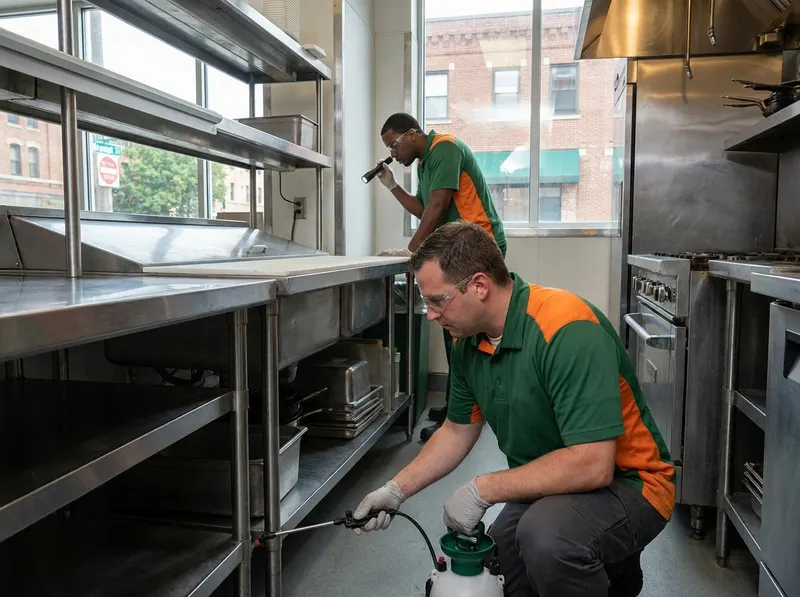
Commercial food prep spaces and multi-unit retail corridors require structural precision rather than indiscriminate chemical fogging. In facilities near high-density dining hubs like the North Loop warehouse district, Whittier's Eat Street, and Uptown, active infestations of German cockroaches (*Blattella germanica*) and Norway rats thrive within utility chaseways, floor drains, and hollow stainless steel prep tables. Chemical aerosols often fail in commercial kitchens because airborne synthetic pyrethroids contaminate food contact zones while dispersing insects deeper into building voids. Commercial kitchen defense operates via Integrated Pest Management (IPM), targeting the biological pressure points of urban pests through temperature-rated silicone seals, galvanized steel mesh across pipe collars, and micro-encapsulated baits placed strictly in inaccessible harborage zones.
Mice and commercial pests exploit seasonal temperature shifts throughout Hennepin County. When cold snaps drop temperatures along the Mississippi River Gorge and the Chain of Lakes, rodent pressure shifts aggressively inward. In older brick construction common across Northeast Minneapolis and Longfellow, a single 1/4-inch opening near an exterior refrigeration condenser or delivery dock threshold allows entry for adult field and house mice. Property managers face immediate regulatory exposure under Minneapolis Health Department food code compliance when droppings or gnaw marks appear. Physical barrier defense addresses this by closing penetration points using stainless steel mesh, copper mesh, and elastomeric foam, cutting off travel corridors between wall voids and customer dining spaces.
Selecting localized physical remediation over repetitive pesticide sprays avoids secondary chemical exposure for kitchen staff, patrons, and residential tenants sharing ceilings with ground-floor bakeries or bars. Commercial property owners in mixed-use neighborhoods like Bryn Mawr, Linden Hills, and Powderhorn Park frequently encounter floor sink fly populations (*Drosophila* and *Psychodidae*) breeding inside organic biofilm. Injecting bio-enzymatic foam digestion agents breaks down grease traps and lines directly, stripping the food source without hazardous vapors. For multi-family properties with shared dry storage in Lynnhurst, exclusion seals placed along electrical conduit runs prevent pest migration into adjacent residential units, halting recurring infestations without requiring full-building evictions.
Every job gets a firm, written price after a free on-site visit.
Tell us about your commercial kitchen and property defense job in Minneapolis and we'll send a clear, written quote, usually the same day.
 Crovella Bug Services